
Crushing
On-site processing of concrete, brick and hardcore into graded recycled aggregate, so demolition arisings become the sub-base, backfill and hardstanding for whatever comes next.
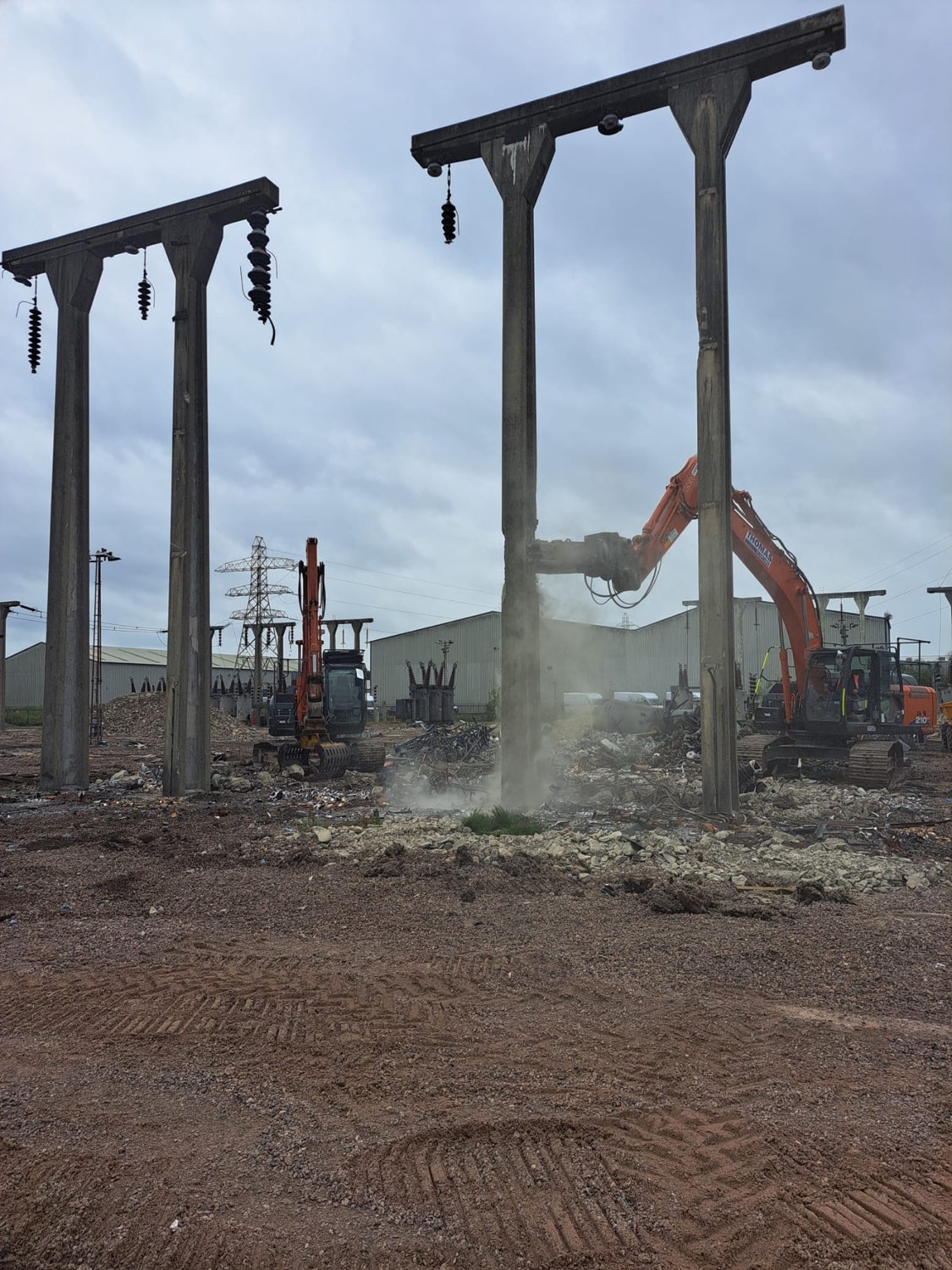
What this covers
- On-site crushing of concrete, brick and hardcore
- Graded recycled aggregate for sub-base and backfill
- Farm tracks, gateways and hardstanding material
- Segregation of arisings ahead of processing
- Crushing planned into a demolition or clearance package
- Stockpiling and placement while plant is on site
Whether crushed material can be reused on your site depends on the material and the rules that apply to it; that is checked as part of planning the job, before anything is promised.
Haulage out, aggregate in
Carting arisings off site pays twice: once for the haulage and the tip, again for imported stone going back into the same hole. Processing clean concrete, brick and hardcore where it already sits cuts lorry movements, keeps material out of landfill and leaves a stockpile already paid for.
What the material is good for
Graded recycled aggregate does the work unbound stone does: sub-base for yards, sheds and hardstanding, farm tracks and gateways, backfill, drainage stone and haunching. On farms and rural sites the arithmetic is usually straightforward, because the structure that made the arisings is standing on the ground that needs them.
Planned into the job in front of it
Crushing works best designed into the demolition or clearance it follows: arisings segregated as the structure comes down, clean concrete stockpiled separately, reinforcement and contaminants picked out, then the finished aggregate placed or heaped where you want it before the plant leaves.
Tell us what the job involves.
From small repairs and residential groundwork to demolition and complete site packages, speak to Cambrian about your project.